Understanding the Liquidation Process: From Retailers to You – How Wholesale Liquidation Pallets Reach Buyers in 2026
Learn how the retail liquidation process works in 2026. Discover the journey of customer returns, overstock, and shelf-pull items from major retailers to high-value wholesale liquidation pallets at Prime Pallet Liquidator.
Liquidation pallets near me
Every year, U.S. retailers process hundreds of billions of dollars in returned and unsold merchandise. In 2025 alone, consumers returned approximately $850 billion worth of goods — representing an average return rate of 15.8% overall and nearly 19.3% for online purchases.
Rather than letting this inventory sit in warehouses, major retailers turn to the liquidation process — a streamlined reverse supply chain that converts excess stock into cash while freeing up space. At Prime Pallet Liquidator, we make this process accessible to resellers, Amazon sellers, contractors, retailers, and flippers by offering transparent, high-value wholesale liquidation pallets across dozens of profitable categories.
This guide walks you through the entire journey — from retailer shelves to your doorstep — so you can buy smarter and profit more in 2026.
What Is Retail Liquidation?
Liquidation is the efficient handling of customer returns, overstock, shelf pulls, and discontinued items that retailers can no longer sell profitably through primary channels. Instead of restocking or discarding these goods, they are sold in bulk at deep discounts to recover capital quickly.
In 2026, stricter return policies, AI-driven inventory forecasting, and growing emphasis on sustainability have improved the overall quality of liquidation inventory while increasing the volume flowing into the secondary market.
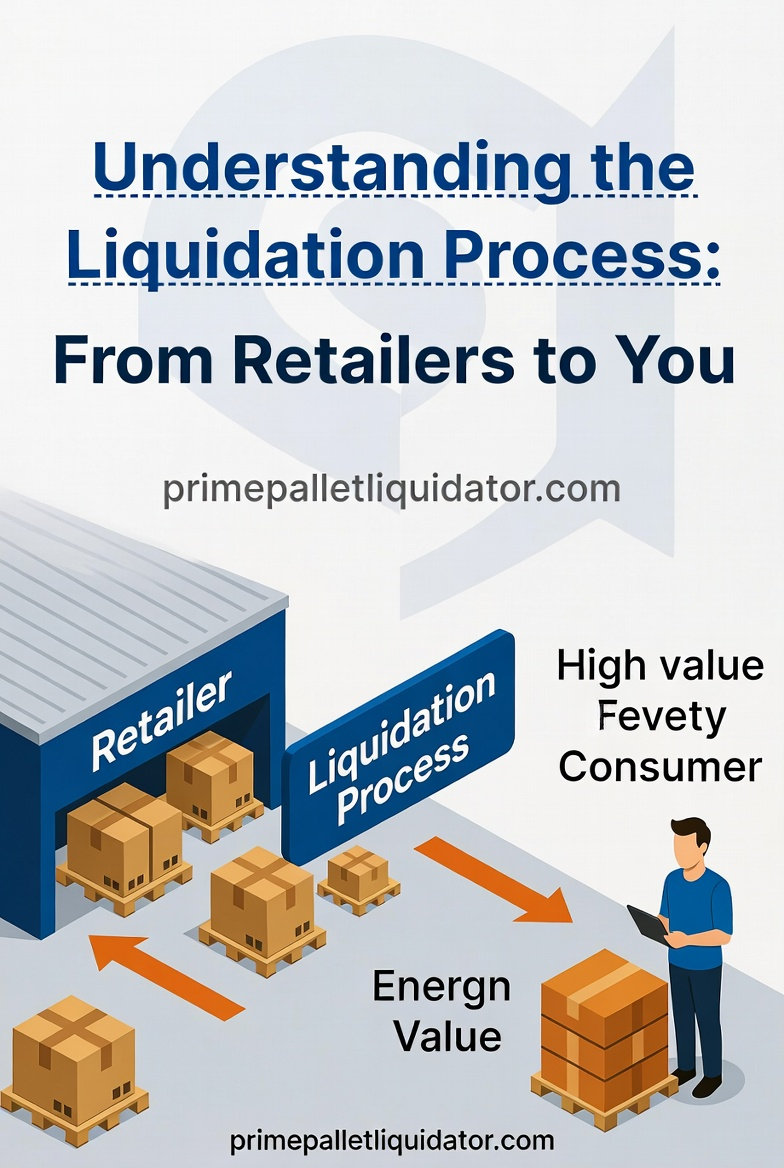
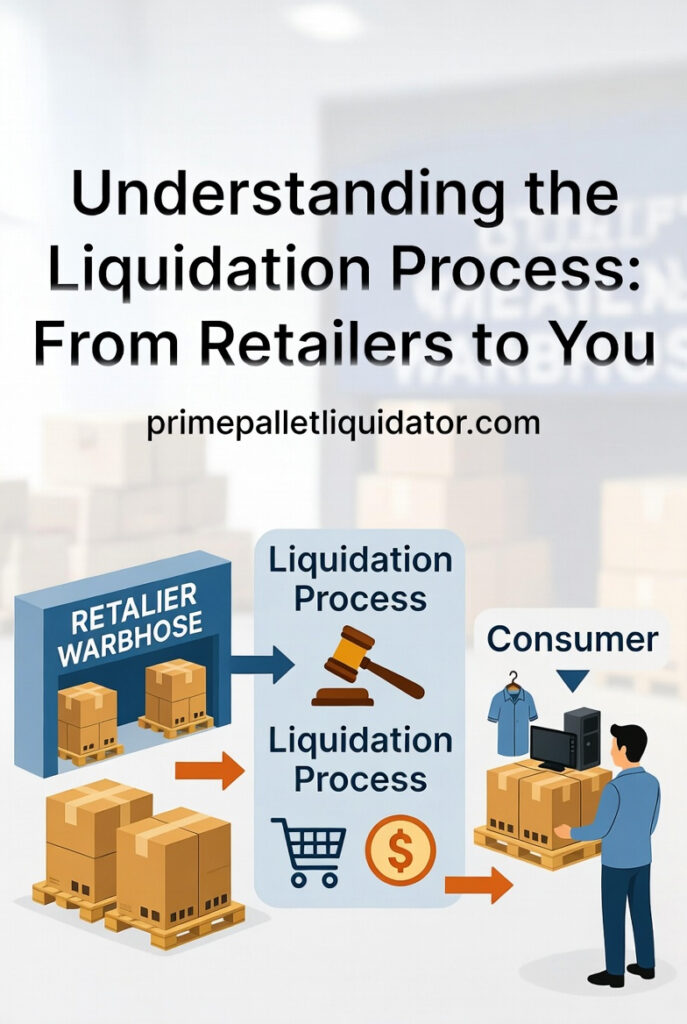
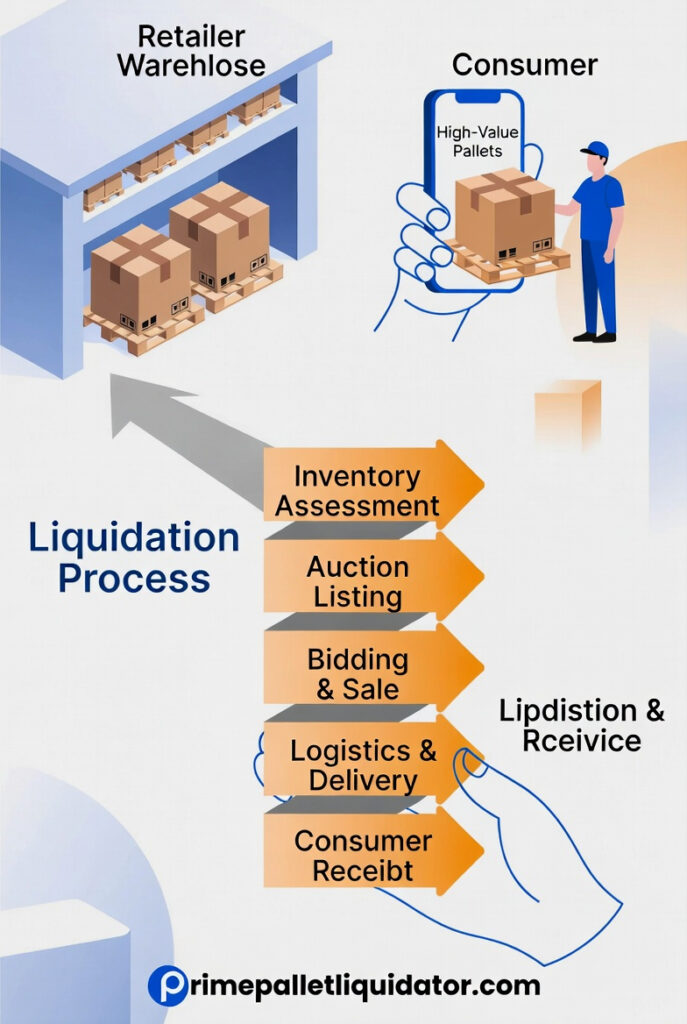
The Liquidation Process: Step by Step
- Accumulation at Retailer Level
Returns arrive daily due to “changed mind,” sizing issues, minor defects, or buyer’s remorse. Simultaneously, overstock builds from seasonal over-ordering, planogram changes, or slower-than-expected sales. These items are collected at stores or returned to regional distribution centers. - Reverse Logistics & Triage
Retailers or specialized 3PL partners inspect, grade, and sort merchandise. Items are categorized by condition:
- New / Overstock (OS): Never sold, pristine packaging.
- Customer Returns (CR): Mix of unopened, open-box, or lightly tested items.
- Shelf Pulls (SP): Clean, unsold inventory removed for new displays.
- Tested / Refurbished: Especially common in electronics, tools, and appliances. Products unsuitable for restocking move into liquidation channels.
- Palletization & Lot Creation
Sorted goods are grouped onto pallets — either by category (e.g., home improvement, bedding, beauty tools) or as mixed assortments. Pallets are shrink-wrapped, labeled, and often include a manifest listing contents and estimated retail value. - Sale to Liquidators & Wholesalers
Retailers sell large volumes through private auctions, direct contracts, or B2B marketplaces. Large liquidators then break down truckloads into smaller, buyer-friendly mixed liquidation pallets for resale. - From Prime Pallet Liquidator to You
We curate pallets from trusted retailer sources, provide high-resolution photos and manifests whenever available, and offer clear condition details. Our professionally prepared pallets ship nationwide or are available for local pickup, giving you ready-to-resell or ready-to-use inventory with strong profit potential.
Why the Liquidation Process Matters in 2026
With retail returns remaining high and sustainability pressures increasing, liquidation has evolved into a strategic “pressure valve.” It helps retailers recover capital fast, reduces waste by giving products a second life, and supplies resellers with high-margin inventory at low cost.
Buyers benefit from:
- Access to brand-name goods at 70-90% below retail.
- Diverse categories including plumbing, garden tools, kitchen appliances, fitness equipment, bedding & linens, lighting, seasonal decor, beauty tools, and more.
- Opportunities in both resale (Amazon FBA, eBay, bin stores) and direct use (contractors, rental properties, retail stocking).
Benefits of Buying Liquidation Pallets from Prime Pallet Liquidator
- Exceptional Value — Pallets frequently carry $8,000–$60,000+ in original retail value.
- Transparency — Detailed photos, manifests, and condition reports reduce risk.
- Trend-Ready Inventory — Includes energy-efficient lighting, sustainable linens, smart tools, and on-trend seasonal items.
- Flexibility — Single pallets for beginners or truckloads for scaling businesses.
- Sustainability Impact — Extends product lifecycles and keeps usable goods out of landfills.
Common Questions About the Liquidation Process
Are liquidation pallets mostly damaged?
No. Most pallets contain a high percentage of new, like-new, or lightly tested items. Quality continues to improve in 2026 due to stricter retailer return policies.
Can I resell items from liquidation pallets?
Yes — these goods are intended for the secondary market. Many buyers achieve strong profits through online platforms, flea markets, or brick-and-mortar sales.
Is buying liquidation pallets risky?
All bulk purchasing involves some variability, but working with a transparent supplier like Prime Pallet Liquidator — with photos and manifests — significantly lowers the risk compared to unmanifested “mystery” lots.
How to Get Started with Prime Pallet Liquidator
Understanding the liquidation process is the first step toward profitable buying. Browse our current selection of wholesale liquidation pallets across high-demand categories or contact our team for the latest manifests, pricing, and availability.
We simplify the journey from retailer excess to your success — delivering reliable, high-value inventory pallet after pallet.
Ready to Buy Smarter in 2026?
“liquidation process,” “wholesale liquidation pallets,” “customer returns pallets,” and “overstock pallets for sale,”
Leave a Reply